Even after living and visiting Brookings for many years, we had somehow never actually seen Rainbow Rock up close.
That changed recently.
We’ve now made the walk from Harris Beach State Park to Rainbow Rock twice, both times taking advantage of low tide. And each visit has been different—a perfect example of how much the Oregon Coast can change.
The amount of sand along this stretch of beach makes a big difference. When more sand is present, it can actually make the walk easier by covering some of the rocky shoreline and creating a smoother path along the beach.
On our most recent visit, there was less sand than during our first visit, which gave us access to something we hadn’t been able to experience before: we could walk through the cave in Rainbow Rock.
That was the highlight of the trip.
Getting to Rainbow Rock
The easiest way to experience Rainbow Rock is to start at Harris Beach State Park and walk north along the beach during a suitable low tide.
Rainbow Rock is approximately 1.8 to 2 miles from the Harris Beach area, making the round trip roughly 3.5 to 4 miles, depending on where you start and how much exploring you do.
This isn’t a maintained hiking trail. You’ll be walking on sand, rocks and uneven shoreline, and conditions can change significantly depending on the tide and the amount of sand on the beach.
Check the tide tables before you go and make sure you have plenty of time to get back before the tide comes in.
How Rainbow Rock Got Its Colors
Rainbow Rock gets its name from the beautiful layers of red, brown, gray and other colors running through the formation.
The rock is made primarily of chert, part of the Dothan Formation. Some of that chert began as the remains of microscopic marine organisms called radiolarians that lived in an ancient ocean hundreds of millions of years ago.
Over immense periods of time, those deposits became rock. Later, tremendous tectonic forces folded and fractured the layers, creating the dramatic patterns we see today.
In other words, Rainbow Rock isn’t just a pretty sea stack.
It’s a piece of an ancient ocean and a record of the powerful geological forces that helped create the Oregon Coast.
Don’t Overlook Snail Rock
Right next to Rainbow Rock is another large, distinctive formation we’ve nicknamed “Snail Rock” because of its shape.
Snail Rock is made from the same type of rock as Rainbow Rock, with the same colorful, layered appearance. On our most recent visit, we also noticed birds nesting on Snail Rock.
It was a great reminder that these dramatic formations aren’t simply scenery—they provide habitat for coastal wildlife. If you see nesting birds, give them plenty of space and enjoy watching them from a distance.
What Happened to the Highway 101 Access?
The old pullout above Rainbow Rock on Highway 101 has been blocked and closed for several years. There are local stories about why it was closed, including claims that RVs were being left there for extended periods and that dumping was occurring below the highway.
We haven’t found an official source confirming that explanation, so we’ll leave that as local lore.
There is also an overgrown trail near the “Welcome to Brookings” sign that appears to lead toward the coast, but when we stopped to investigate, we couldn’t find an obvious maintained trail and decided not to attempt it.
For us, the beach walk from Harris Beach is the much better way to experience Rainbow Rock.
A Different Rainbow Rock Every Time
One of the best things about Rainbow Rock is that you never quite know what you’ll find.
The sand moves. The tide changes the shoreline. Passages open and close.
On our second visit, the lower sand level allowed us to walk through the cave. We saw nesting birds on Snail Rock and discovered details in the rock formations that we hadn’t noticed before.
After years of living around Brookings, we’re glad we finally made the trip.
Rainbow Rock is one of those places that reminds us why we love the Brookings coast: sometimes you don’t have to go somewhere new. You just have to come back when the ocean has changed the landscape.
And if you’ve lived here for years and still haven’t visited Rainbow Rock, check the tides and go explore.
One of the best things about exploring the Oregon Coast is that you never know what you’ll see.
Last week, we had the incredible treat of watching two river otters at Rainbow Rock near Brookings. They ran out toward the ocean, retreated, and then ventured back out again—all with the glorious backdrop of Rainbow Rock and waves crashing along the shore.
It was one of those unforgettable Oregon Coast moments that makes you stop, watch and appreciate the wild beauty around you.
River otters are found throughout Oregon and are comfortable in rivers, lakes, wetlands and coastal waters. They are excellent swimmers and can travel between waterways over land. Seeing them along the coast is just one more reminder of how much wildlife shares this beautiful place we call home.
But did you know Oregon once had sea otters, too?
Sea otters are a completely different species. They spend nearly their entire lives in the ocean and are considered a keystone species, playing an important role in maintaining healthy marine ecosystems. By eating sea urchins and other marine animals, sea otters can help protect kelp forests and the many species that depend on them.
Sadly, sea otters were hunted extensively during the maritime fur trade because their incredibly dense fur was highly valuable. After centuries of hunting, they disappeared from Oregon. The last known Oregon sea otter was killed near Newport in 1906.
There was a brief attempt to bring them back. In 1970 and 1971, 93 sea otters from Alaska were released along the southern Oregon Coast. Some survived and even produced pups, but the population eventually disappeared.
Today, there is new hope.
The Elakha Allianceis working with scientists, tribes, conservation groups, fishermen and coastal communities to determine how sea otters could successfully be reintroduced to Oregon. Their goal is to restore a missing piece of Oregon’s coastal ecosystem and potentially help rebuild healthier kelp and nearshore habitats. We are donating a portion of our sales from any Brookings By the Sea Otter merchandise to support the Elakha Alliance.
For those of us who love exploring Brookings and the Southern Oregon Coast, wildlife encounters like our river otter sighting are a privilege. They also come with a responsibility.
We’re sharing their home.
When hiking, walking the beach or exploring with our dogs, keeping pets under control and giving wildlife plenty of space helps protect the animals that make this coast so special. Our dogs may be curious, but wildlife needs room to move, feed and raise their young without being chased or disturbed.
At Brookings by the Sea, we believe the best adventures are the ones where we can experience nature while leaving it wild.
And maybe someday, alongside our river otter sightings, we’ll once again have the chance to watch sea otters swimming along the Oregon Coast.
Discover where to spot harbor seals in Brookings, Oregon, including South Harris Beach. Learn how to identify seals, when pups are born, and how to view these protected marine mammals responsibly.
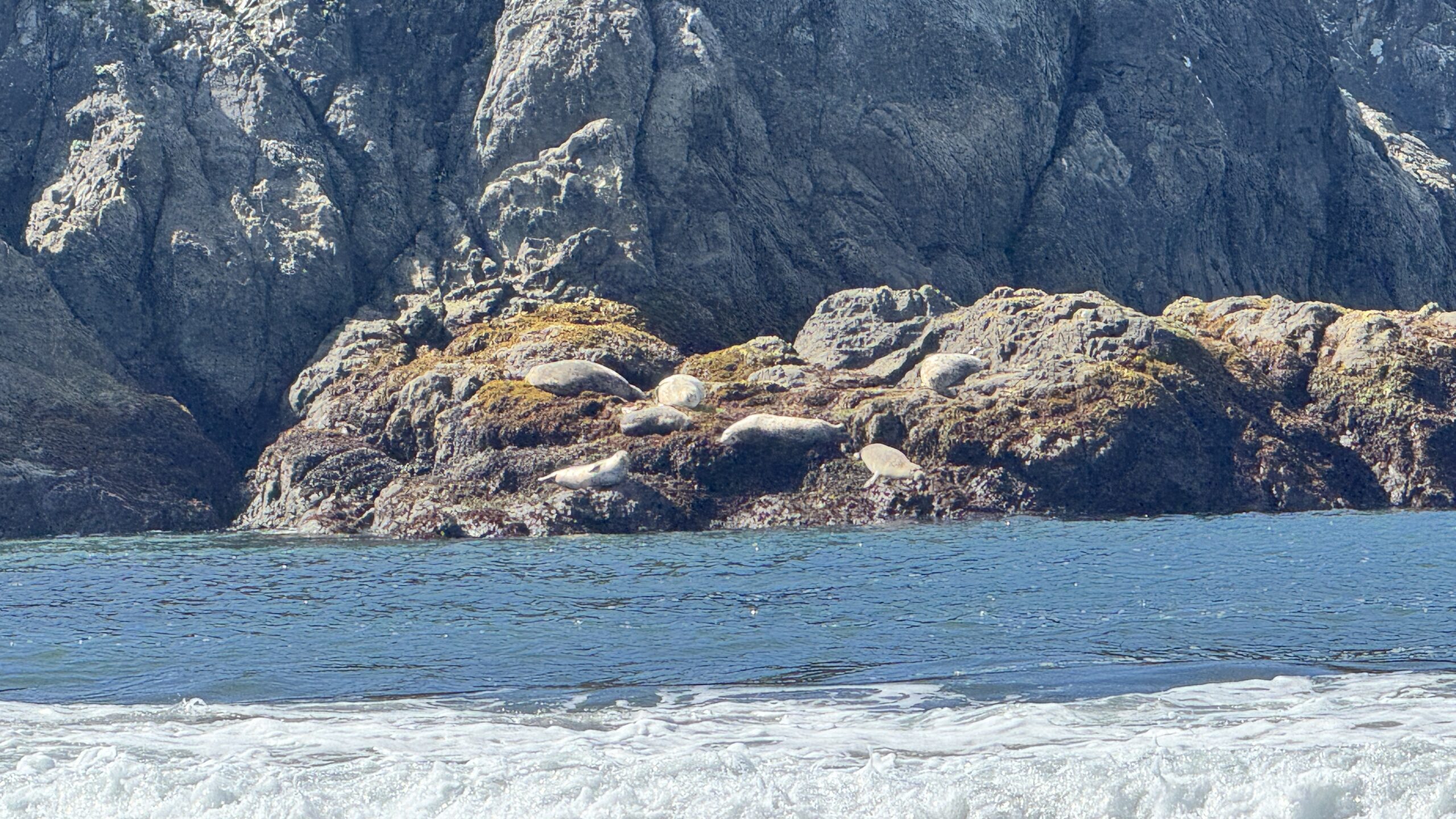
One of the quiet joys of exploring Brookings is discovering the harbor seals that call our shoreline home. A favorite place to spot them is on the offshore rocks at the south end of South Harris Beach, where they often haul out to rest between feeding trips in the Pacific.
Harbor seals generally stay close to home rather than making long migrations. Most spend their lives within the same stretch of coastline, returning to familiar haul-out rocks and beaches year after year. Their home range may extend for many miles along the coast, but the waters around Brookings provide everything they need to thrive.
Wondering whether you’re looking at a harbor seal or a sea lion? Harbor seals have small, rounded heads, lack external ear flaps, and usually rest quietly on rocks or near shore. Sea lions are typically larger, with visible ear flaps, longer front flippers, and a much more boisterous, social nature. Once you know these simple clues, it becomes easy to tell Brookings’ peaceful harbor seals from their lively sea lion cousins.
Watching seals bask in the sun or bob in the surf is a memorable experience, but it is important to remember that they are protected marine mammals. Please admire them from a distance and never attempt to approach, feed, or disturb them. If a seal raises its head, shifts position, or slips into the water because of your presence, you are too close.
Harbor seal pups are usually born from late spring into early summer, making this an especially sensitive season. Mothers may leave their pups alone for short periods while they forage, so a pup resting quietly on the beach is not necessarily abandoned.
Life along the coast is not without challenges. Great white sharks and transient orcas are the primary natural predators of harbor seals, reminding us that these graceful animals are an important part of the Pacific ecosystem.
Whether you catch a glimpse of a single seal or an entire group resting on the rocks, take a moment to appreciate the wild beauty of Brookings. Encounters like these are a wonderful reminder that on the southern Oregon coast, remarkable wildlife is never far from shore.
Brookings is a haven for seafood lovers, where the Pacific Ocean’s bounty arrives fresh each day. A stroll around the Port of Brookings Harbor may reward you with the sight of fishing boats unloading their catch—or, on occasion, the opportunity to purchase seafood right from the docks. It’s a delicious reminder that in Brookings, the journey from sea to table is often measured in hours rather than days.
For the freshest flavors, be sure to visit local seafood markets and restaurants that celebrate the traditions of the southern Oregon coast. One local favorite is Catalyst Seafood Restaurant and Lounge, where generations of fishing heritage meet modern coastal cuisine. The Goergen family cast their first line into the Pacific in 1955, beginning a legacy that continues today aboard the fishing vessel Catalyst. Four generations later, the crew proudly serves locally caught fish and crab while supporting commercial fishermen throughout Oregon and California. Guests can enjoy exceptionally fresh seafood on the restaurant’s welcoming, dog-friendly patio.
Another beloved destination is Pacific Sushi & Grill, a favorite among locals for its creative rolls and impeccably fresh seafood. Whether you crave wild salmon, Dungeness crab, oysters, or expertly crafted sushi, Brookings offers a taste of the Pacific Northwest that is both authentic and unforgettable.
Come hungry, explore the harbor, and savor the flavors that make Brookings one of the Oregon Coast’s finest seafood destinations.
Think you need to visit Cannon Beach to see elk on the Oregon Coast? Think again. The wild Roosevelt elk of Brookings have been calling the southern Oregon coast home for generations.
In Brookings, you don’t have to schedule a wildlife tour to see Roosevelt elk — sometimes the elk are the ones who decide to make an appearance.
One of the most unforgettable surprises about visiting Brookings is seeing these majestic animals wandering through town, grazing in open fields, or moving quietly through coastal forests just minutes from the ocean.
While many people travel north to spot elk along the coast, Brookings offers its own incredible wildlife experience. Here, Roosevelt elk are part of the landscape — where ancient forests meet the sea and nature is woven into everyday life.
Roosevelt Elk: Coastal Giants of the Pacific Northwest
Roosevelt elk are the largest subspecies of elk in North America and are uniquely adapted to the lush coastal forests of Oregon and Washington. Named after President Theodore Roosevelt, these impressive animals can weigh over 1,000 pounds, with bulls displaying massive antlers during the fall rut.
Seeing a herd of elk with the Pacific Ocean as a backdrop is a truly special Southern Oregon Coast experience.
Where to See Elk in Brookings
One of the best things about elk viewing in Brookings is that you don’t have to travel far. These wild residents are often spotted in open spaces throughout town and along the coastal landscape.
🦌 Bud Cross Park Keep an eye on the open grassy areas around Bud Cross Park. Elk are sometimes seen grazing nearby, especially during quieter times of day when the park is less busy.
🦌 Open Field Across from Dollar General This local open space has become a favorite grazing area for Brookings’ elk herds. It’s one of those special reminders that in Brookings, wildlife can appear in the most unexpected places — even during a simple trip through town.
🦌 Harris Beach State Park & the Multi-Use Trail Visitors come to Harris Beach for its dramatic sea stacks, coastal views, and beach adventures, but the park is also a place where you may spot Roosevelt elk moving through the surrounding landscape. A walk along the multi-use trail may reward you with a memorable wildlife encounter.
Tips for Watching Elk Safely
Roosevelt elk may seem calm and peaceful, but they are wild animals and deserve plenty of space.
🦌 Observe elk from a safe distance.
📸 Use binoculars or a camera zoom rather than approaching.
🐕 Keep dogs leashed and give elk extra room.
🍂 Be especially cautious during fall rut and spring calving season when elk can become more protective.
Experience the Wild Side of Brookings
From sea stacks and hidden beaches to towering redwoods and roaming elk herds, Brookings offers a rare opportunity to experience the wild beauty of the Oregon Coast.
So the next time someone says you need to go north to see coastal elk, share the secret:
The elk already know — Brookings is home.
Brookings Oregon elk • Roosevelt elk Oregon Coast • elk viewing in Brookings • Harris Beach State Park wildlife • things to do in Brookings Oregon • southern Oregon Coast wildlife • wildlife viewing Oregon Coast
If you’ve traveled the Oregon Coast, you may notice something different when you arrive in Brookings. The skies are often brighter, the winds are calmer, and the temperatures feel just a little warmer.
That’s thanks to the Chetco Effect—a unique weather phenomenon that gives Brookings one of the mildest climates on the Oregon Coast.
What Is the Chetco Effect?
Warm, dry air flows through the Chetco River canyon and descends toward the coast. As it drops in elevation, the air compresses and warms, creating a unique microclimate. Combined with the surrounding mountains, which help block strong coastal winds, Brookings often enjoys more sunshine, warmer temperatures, and calmer weather than many other Pacific Northwest beach towns.
Yes, we still experience fog—especially during summer mornings—but it often burns off by late morning, revealing beautiful afternoons perfect for beach walks, hiking, tide pooling, and whale watching.
Average Temperatures
Whether you’re planning a summer vacation or a winter escape, Brookings offers one of the most comfortable climates on the Oregon Coast—and that’s one of the many reasons visitors return year after year. With a summertime average high of 68 degrees and low of 53 degrees and winter average high of 56 degrees and low of 46 degrees.
Frequently Asked Questions
Why is Brookings called the Banana Belt? Because Brookings enjoys a mild, sunny microclimate that is warmer than many other Oregon coastal communities.
What is the Chetco Effect? It’s a weather pattern where warm, dry air flows through the Chetco River canyon and warms as it descends toward Brookings.
Does Brookings have better weather than the rest of the Oregon Coast? Many visitors think so. Brookings often experiences more sunshine, less wind, and milder temperatures than neighboring coastal towns.
When is the sunniest time to visit Brookings? Late spring through early fall typically offers the most sunshine, although Brookings’ mild climate makes it a wonderful destination year-round.
Beaches, Scenic Viewpoints, and Easy Adventures on the Southern Oregon Coast
One of the things we love most about Brookings is that some of the Oregon Coast’s most breathtaking scenery doesn’t require a strenuous hike to enjoy. Whether you’re traveling with a wheelchair, walker, stroller, limited mobility, or simply looking for an easy walk with spectacular views, you’ll find plenty of beautiful places to explore.
While we’ve focused on destinations that are generally accessible, conditions can change with tides, weather, seasonal maintenance, and natural events. We always recommend checking current conditions before visiting and choosing locations that best fit your individual mobility needs.
Here are some of our favorite accessible places to experience Brookings by the Sea.
The park features an accessible ocean viewing platform overlooking iconic sea stacks, crashing waves, and abundant wildlife. It’s one of the best places on the Southern Oregon Coast to watch gray whales during migration seasons, spot harbor seals and sea lions, or simply relax while listening to the surf.
An ADA-accessible ramp also provides beach access, making Harris Beach one of the most accessible ways to experience the Oregon Coast firsthand.
Lone Ranch Beach
Lone Ranch Beach is another beautiful stop with parking located just steps from the shoreline.
A short trail leads down to the beach. While many visitors find it manageable, portions of the trail can be uneven, so some people using mobility devices may prefer assistance.
Even if you stay near the parking area, the sweeping ocean views alone are worth the visit.
Brookings Multiuse Path
One of Brookings’ hidden gems is the paved Multiuse Path stretching from Beach Avenue to Dawson Road.
Perfect for walking, rolling, or biking, this scenic trail winds through beautiful coastal forest while offering incredible ocean views along the way. One especially unique section follows the original Highway 101, now preserved exclusively for pedestrians and cyclists.
It’s a peaceful way to enjoy the coast without climbing steep trails.
Chetco Point Park
Ask a local about their favorite place in Brookings, and Chetco Point is likely to make the list.
Park near the Brookings Wastewater Treatment Plant and follow the paved pathway a short distance to a picnic area overlooking Chetco Point, Mill Beach, and miles of rugged coastline.
The trail continues past an off-leash dog park and public restroom. During lower tides, visitors can access a small beach on the north side of Chetco Point.
If you’re up for a bit of a climb, continue along the fairly steep—but paved—path leading to the point itself. Cross the charming wooden bridge and you’ll be rewarded with nearly 300-degree panoramic views of the Pacific Ocean.
At the center of the point stands a beautiful public art sculpture, creating the perfect place to pause and take in the scenery.
Please stay on the paved pathway, as the surrounding cliffs have dangerous drop-offs. Keep children and pets close at all times.
On clear days, you can see all the way to the historic St. George Reef Lighthouse off the California coast. During gray whale migration, this is one of our favorite places to watch for spouts offshore. One local even witnessed a pod of migrating orcas passing by—a truly unforgettable sight, though definitely a rare treat!
Azalea Park
Looking for flowers instead of waves?
Azalea Park offers beautiful paved pathways that meander through colorful gardens filled with azaleas, rhododendrons, towering trees, and peaceful green spaces.
If you’re visiting during the summer, don’t miss the free Concerts in the Park every Sunday at 1:00 p.m.—a favorite Brookings tradition enjoyed by locals and visitors alike.
Samuel H. Boardman Scenic Corridor
Some of Oregon’s most famous coastal scenery can be enjoyed without a long hike.
The viewpoints at Natural Bridges and Arch Point offer stunning overlooks of sea stacks, dramatic cliffs, and turquoise water. These accessible viewpoints provide unforgettable photo opportunities and allow many visitors to experience the incredible beauty of the Samuel H. Boardman Scenic Corridor.
Wide sidewalks make it easy to stroll or roll between locally owned shops, waterfront restaurants, and scenic marina views.
Take time to explore the outdoor historical exhibit honoring the Chetco people, the area’s first inhabitants, and watch commercial fishing boats unload their daily catches.
Depending on the season, you may even be able to purchase fresh fish, Dungeness crab, or shrimp directly from the docks to enjoy back at your vacation rental.
Bonus Adventure: David’s Chair at Gold Beach
Just 30 minutes north of Brookings, the Gold Beach Visitor Center offers one of the most inspiring accessibility experiences on the Oregon Coast.
Visitors can reserve David’s Chair, a specially designed all-terrain tracked wheelchair that allows people with significant mobility limitations to travel across soft sand and experience the beach in ways that would otherwise be impossible.
For many families, it’s an emotional opportunity to once again feel the ocean breeze, hear the waves up close, and reach the shoreline together.
Reservations are strongly recommended, so be sure to call the Gold Beach Visitor Center ahead of your visit for availability and scheduling information.
The Southern Oregon Coast Is for Everyone
The beauty of Brookings isn’t measured by how far you can hike—it’s measured by the unforgettable moments you experience.
From accessible beaches and paved coastal trails to panoramic viewpoints, peaceful gardens, and working waterfronts, Brookings offers countless opportunities for visitors of all ages and abilities to enjoy one of Oregon’s most spectacular destinations.
We hope this guide helps you discover that the Southern Oregon Coast truly has something for everyone.
Tide Pooling in Brookings, Oregon: Discover the Hidden World Beneath the Waves
When the tide recedes along the Southern Oregon Coast, an entirely different world comes to life.
What was hidden beneath the crashing Pacific waves just hours before transforms into a living aquarium filled with colorful sea stars, anemones, tiny fish, hermit crabs, and countless other fascinating marine creatures. It’s one of nature’s greatest treasures—and one of our favorite adventures in Brookings.
Whether you’re introducing your children to tide pools for the first time or you’re an experienced coastal explorer, Brookings offers some of the best tide pooling opportunities on the Oregon Coast.
Where to Find the Best Tide Pools
Some of Brookings’ most spectacular tide pools can be found anywhere rocky reefs meet the ocean, especially during the lowest tides of the year.
Our favorite locations include:
Harris Beach State Park– Explore around the iconic Keyhole Rock during very low tides. This is one of Brookings’ most popular tide-pooling destinations, where colorful sea stars, anemones, limpets, chitons, and tiny crabs often thrive among the rocks.
Lone Ranch Beach– This scenic beach offers excellent tide-pooling opportunities with plenty of rocky outcroppings to explore.
Mill Beach– A local favorite where rocky shoreline creates numerous tide pools waiting to be discovered.
Every visit is a little different, making each low tide an exciting new adventure.
The Secret Is Timing
The best tide pools only appear when the ocean gives them back.
For the most rewarding experience, plan your visit during a negative tide, when the water falls below its average low tide level. These extreme low tides expose portions of the rocky shoreline that remain underwater most of the year.
Negative tides occur throughout the year but are often the most dramatic during the spring and fall. Be sure to check a local tide chart before heading out—arriving an hour before the lowest tide usually provides the best opportunity to explore safely.
What You Might Discover
One of the greatest joys of tide pooling is that you never know what you’ll find.
Keep an eye out for:
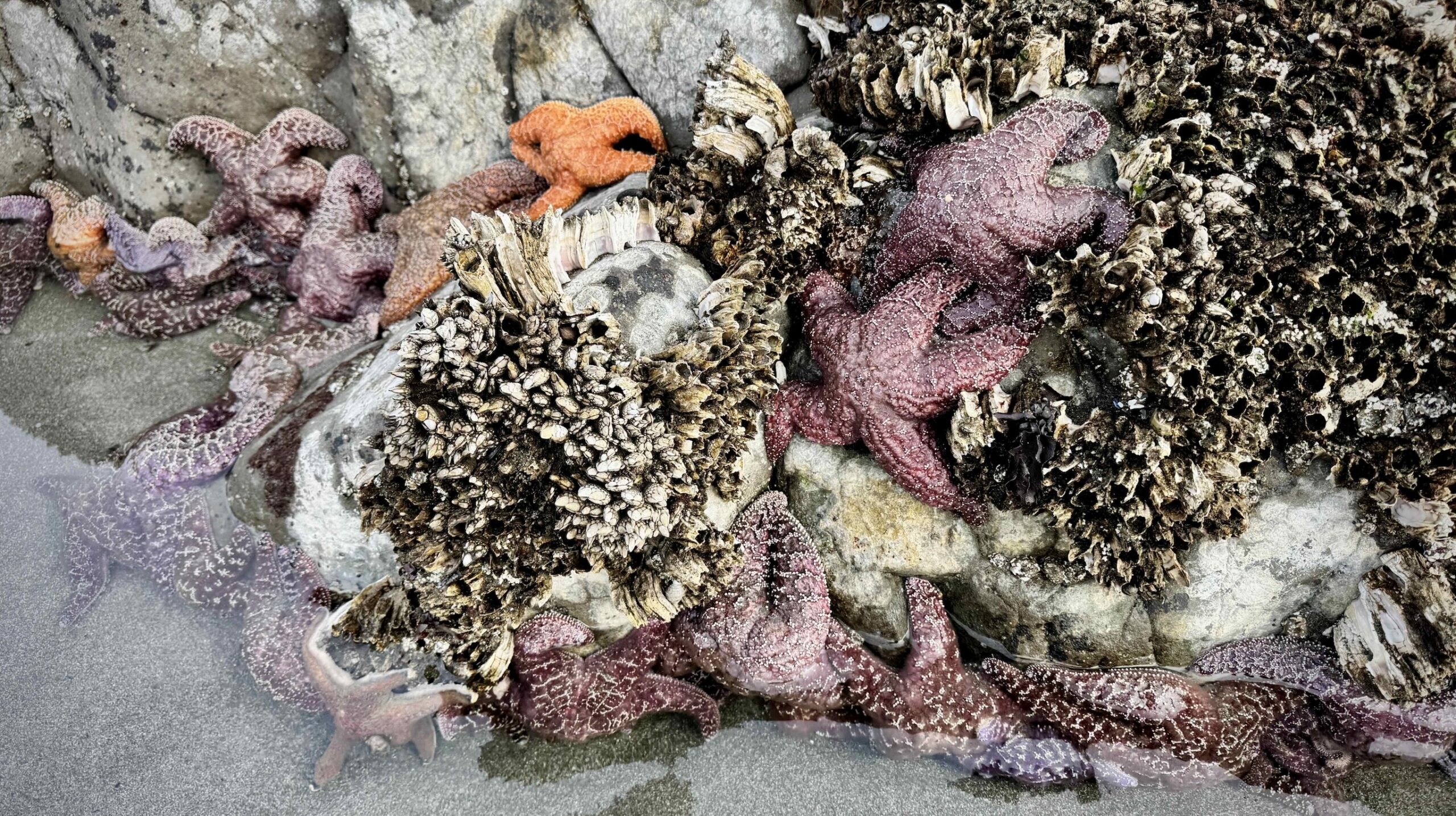
Brilliant purple and orange Ochre sea stars clinging to rocks
Colorful sea anemones swaying gently beneath the water’s surface
Hermit crabs searching for their next shell
Shore crabs darting between crevices
Tiny fish hiding in shallow pools
Limpets, chitons, mussels, and sea snails
The occasional octopus tucked away beneath a rocky ledge if you’re especially lucky
Take your time. The slower you move, the more life you’ll notice.
Tide Pool Etiquette: Protect This Fragile Ecosystem
Tide pools may look rugged, but they’re incredibly delicate ecosystems.
Help preserve them for future visitors by following a few simple guidelines:
Wear sturdy waterproof shoes with excellent traction—rocks can be slippery.
Watch for sneaker waves and never turn your back on the ocean.
Keep an eye on the tide. Water can return surprisingly quickly.
Never pry sea stars, anemones, or shellfish from the rocks.
Leave rocks as you found them, and pack out everything you bring in.
The best memories come from observing, photographing, and appreciating these incredible creatures in their natural home.
A Few Local Tips
Summer weekends can be busy, especially at Harris Beach. For a quieter experience, visit early in the morning or choose a weekday.
Many locals like to arrive about an hour before the lowest tide and linger as the pools are fully exposed. Don’t forget a camera, a pair of binoculars for spotting seabirds offshore, and a tide chart before you head out.
Experience the Magic Beneath the Waves
Tide pooling reminds us that some of the Oregon Coast’s greatest wonders aren’t found on the horizon—they’re hidden beneath our feet.
Every pool tells a different story, every visit reveals something new, and every low tide offers another opportunity to connect with one of the most diverse marine ecosystems on the Pacific Coast.
So check the tide tables, lace up your shoes, and head for the rocky shoreline. You never know what incredible discoveries are waiting just below the waves.
Happy exploring, and remember to leave only footprints so these amazing tide pools can be enjoyed for generations to come.
Celebrating 100 Years of Camping, Coastal Beauty, Wildlife, and Adventure in Brookings, Oregon
If you’ve followed Brookings by the Sea for any length of time, you’ve probably noticed one thing: I absolutely love Harris Beach State Park. In fact, Harris Beach is one of the main reasons I eventually moved to Brookings.
Before becoming a local, my husband Bob and I spent years camping here. For five years straight, we visited at least once a month, escaping to the Oregon coast whenever we could. What started as weekend camping trips eventually became something much more—we fell in love with this place and the community surrounding it.
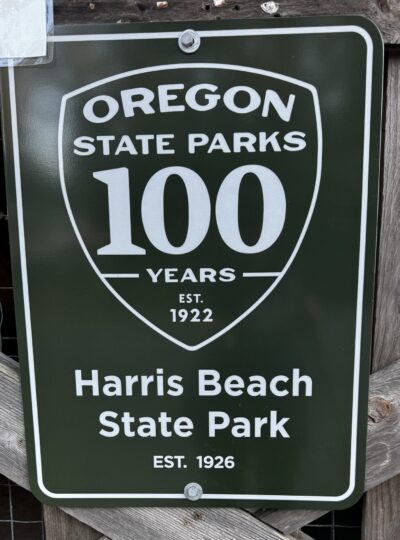
And in 2026, Harris Beach State Park is celebrating an incredible milestone: 100 years as an Oregon State Park. The first parcels of land that would become the park were acquired in 1926, beginning a century-long legacy of protecting one of the most spectacular stretches of coastline in Oregon.
A Century of History Harris Beach is named after Scottish immigrant George Scott Harris, who settled the area in the 1870s. Harris raised sheep and cattle on the coastal land and later served as a Curry County Commissioner. The property remained in the Harris family until portions were acquired by Oregon for park development beginning in 1926. Over the decades, additional land was added and the park evolved into one of Oregon’s premier coastal destinations. Today, Harris Beach remains one of the most visited and beloved state parks on the Oregon Coast.
One of Oregon’s Best Campgrounds I’ve camped all over Oregon, and Harris Beach remains my favorite campground. The campsites are spacious, clean, and thoughtfully designed. Many sites offer full hookups, while privacy shrubs and trees help create a more secluded feel than many coastal campgrounds. The grassy sites make it comfortable whether you’re tent camping or arriving in an RV.
One feature I especially appreciate is the convenience. Garbage cans are located throughout the campground rather than requiring campers to trek to a single dumpster. Cell service is generally excellent, making it easy to stay connected if needed.
Unlike many inland campgrounds that face seasonal fire restrictions due to wildfire danger, campfires are often permitted year-round at Harris Beach. Firewood is typically available for purchase from the camp hosts, making evenings around the campfire easy and enjoyable. After dozens of camping trips over the years, one thing has never changed: the sound of the ocean at night. Sitting around a campfire and later drifting off to sleep with the waves rolling onto shore is one of the experiences that made me fall in love with Harris Beach—and ultimately with Brookings itself.
Harris Beach books up quickly so set your date and be ready to book 6 months ahead of your arrival. There are cancellations and a few “last minute” openings. Make your reservation on the state website.
A Dog Lover’s Paradise One of the reasons we keep returning to Harris Beach is that it’s such a wonderful place to visit with dogs.
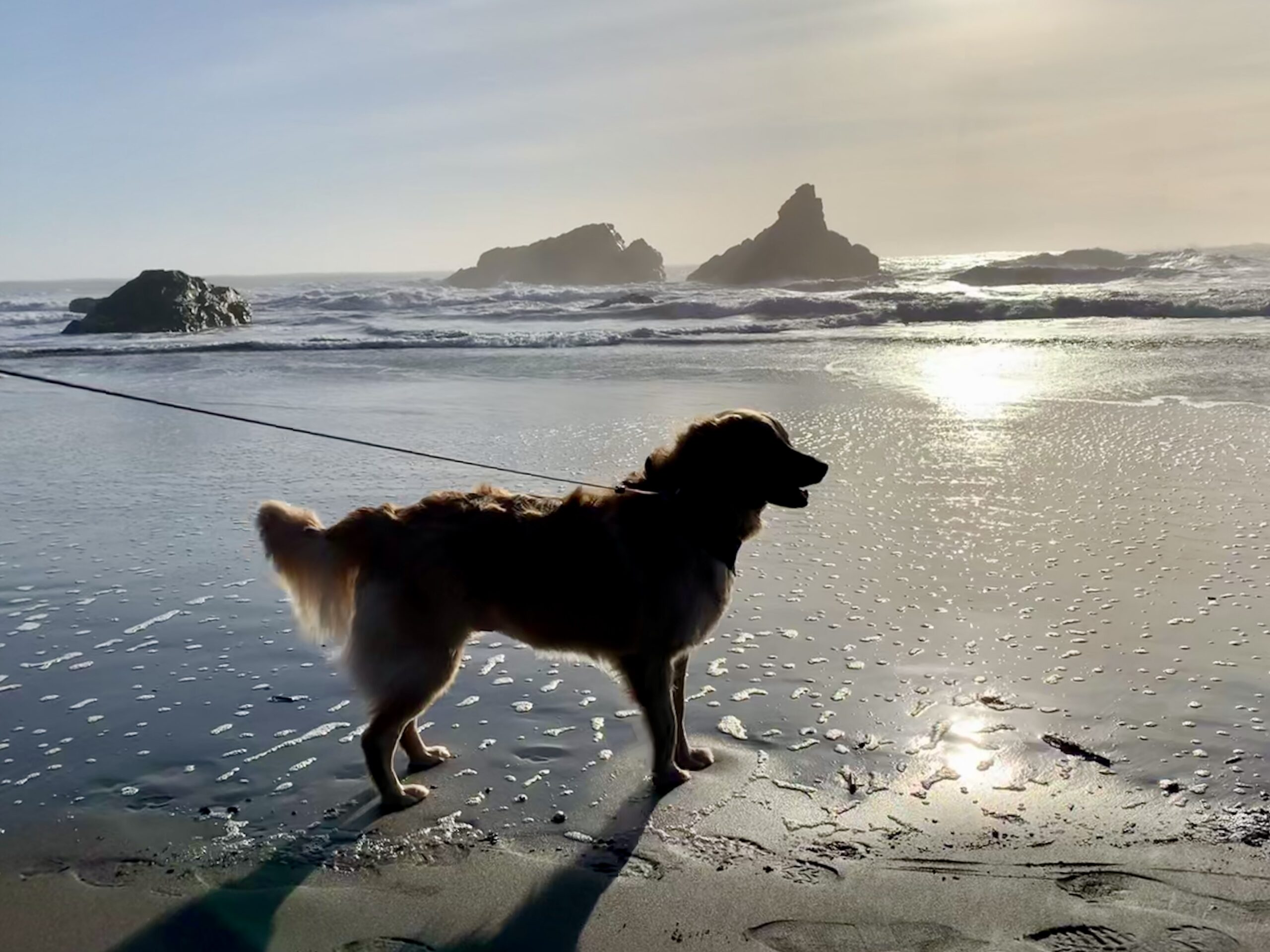
Our dogs, Sammy and River, absolutely love exploring the beach, sniffing the salty air, and joining us on our camping adventures. Few things make me happier than watching them enjoy the shoreline with the Pacific Ocean as a backdrop.
Another benefit of camping at Harris Beach is how close you are to pet-friendly amenities in Brookings. If you forget supplies or want to spoil your furry companions, Mini Pet Mart is just minutes away. We also love stopping by Woof’s Dog Bakery for special treats. It’s one more example of why Brookings is such a welcoming destination for travelers with pets.
The Perfect Place to “Glamp”
One of the things that sets Harris Beach apart is its location. You’re surrounded by natural beauty, yet just minutes from the conveniences of Brookings. Need groceries? Fred Meyer is just a short drive away. Forgot camping supplies? No problem. Want a great dinner after a day at the beach? You’re in luck.
My husband and I often joked that we weren’t really camping—we were “glamping.” After spending the day exploring the coastline and walking the beach, we’d head into town for dinner. Our favorite spot remains the Railhouse Grill. The dog-friendly patio is perfect when traveling with pets, the service is consistently excellent, and the food never disappoints. And after a day of coastal adventures, a cold Bhodi draft beer always seems to hit the spot.
Goat Island: The Star of the Show The view that first captures most visitors’ attention is Goat Island, the massive island just offshore. Known locally as Bird Island and Goat Island, it is the largest island off the Oregon Coast and serves as an important wildlife refuge. The island’s dramatic profile dominates the view from the beach and creates one of the most iconic coastal scenes in Oregon. Watching the changing light on Goat Island throughout the day never gets old.
Wildlife Watching at Harris Beach Harris Beach offers excellent wildlife viewing opportunities, especially for bird lovers. The most common wildlife visitors will see are seabirds. Seagulls, brown pelicans, and cormorants are frequently spotted soaring above the coastline or resting on offshore rocks. In the distance, patient observers may even spot tufted puffins around Goat Island during nesting season. One of my favorite wildlife experiences at Harris Beach is watching harbor seals. They can often be found lounging on the rocks at the south end of South Harris Beach, especially during low tide. Watching them nap peacefully in the sun is a reminder that this coastline remains wonderfully wild. While gray whales and sea lions are occasionally seen offshore, sightings are less common and often depend on the season and a little bit of luck.
North Harris Beach: Accessible Beauty The main beach area—often called North Harris Beach—is one of the most accessible beaches on the Southern Oregon Coast. Visitors will find ample parking, restrooms, picnic areas, and an ADA-accessible ramp that provides access to the beach below. The beach itself features dramatic sea stacks, expansive sandy shoreline, and endless opportunities for photography. From the beach and viewpoints, visitors enjoy spectacular views of Goat Island and the rugged coastline that makes Harris Beach one of Oregon’s most photographed destinations.
One of my favorite aspects of North Harris Beach is how easy it is for nearly everyone to enjoy the spectacular scenery. From the parking area, visitors can quickly reach viewpoints overlooking Goat Island and the rugged coastline that makes this stretch of Oregon so special.
Don’t Miss the Hidden Keyhole Rock One of Harris Beach’s most spectacular features is surprisingly easy to miss. A short trail in the middle portion of the park leads to a viewpoint overlooking the famous Keyhole Rock arch. Many visitors never discover it because it isn’t visible from the main beach area. If you’re visiting Harris Beach, make time for this short walk. The natural arch framed by crashing waves creates one of the most photogenic scenes anywhere on the Oregon Coast.
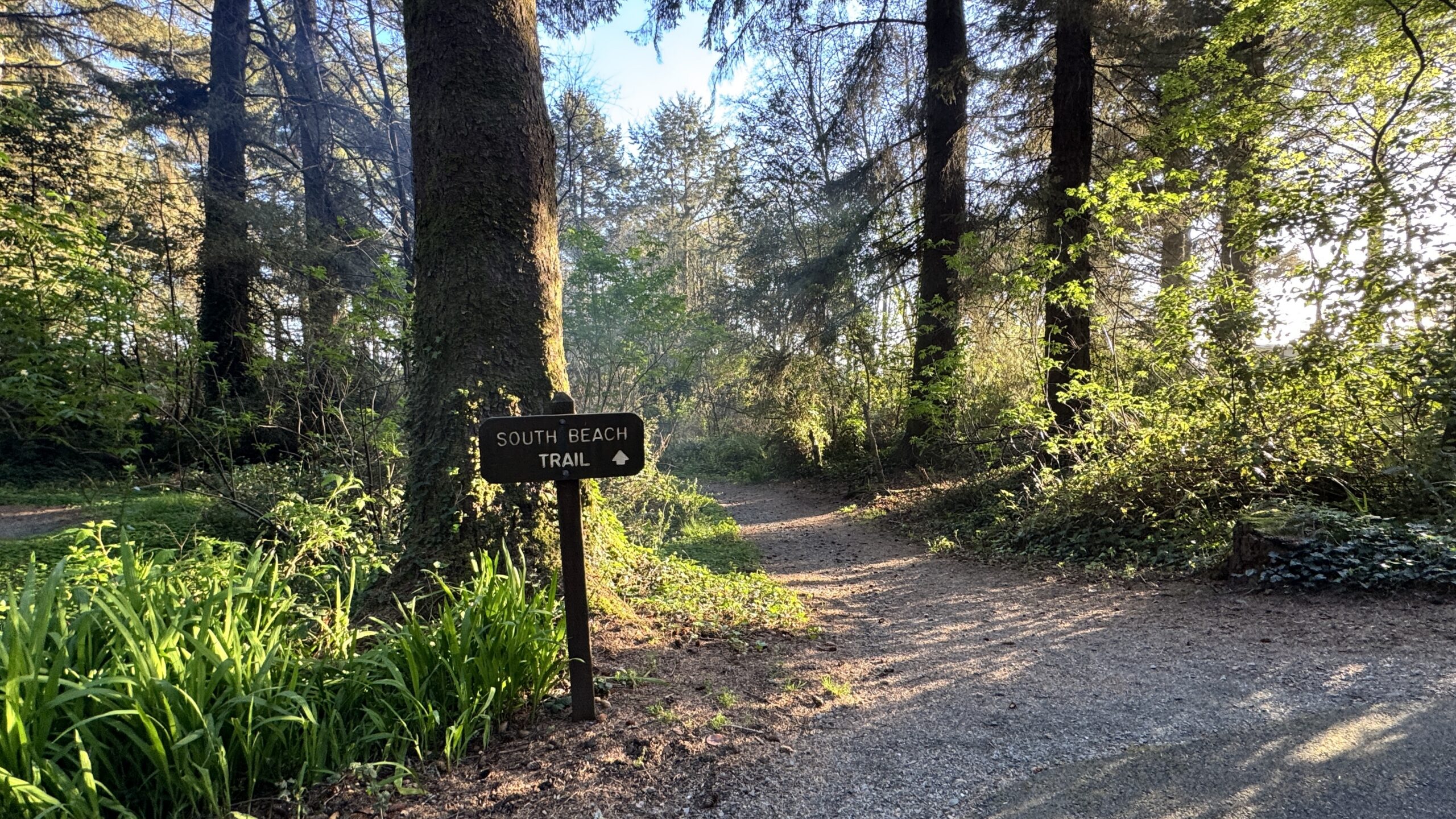
South Harris Beach: My Favorite Spot While the north beach gets most of the attention, South Harris Beach is where I often send visitors looking for a truly unforgettable experience. A small parking area near the southern entrance provides access to a somewhat rough trail leading down to the beach. The effort is rewarded immediately.
Looking north, you’ll find some of the most spectacular sea stacks on the Oregon Coast. During golden hour, the sunlight illuminates the rock formations in a way that feels almost magical.
South Harris Beach is also one of the best places in the park to explore tide pools. During low tide, the rocky area at the north end of South Harris Beach reveals a fascinating world of marine life. Visitors may discover sea stars, anemones, hermit crabs, mussels, and other tide pool creatures tucked among the rocks.
Looking south, waves crash dramatically into rocky cliffs and offshore formations, creating an ever-changing display of coastal power. This is one of my favorite places in Brookings to watch a sunset.
Why Harris Beach Still Feels Like Home Even though I now live in Brookings, Harris Beach remains my go-to beach. I visit when I need to clear my mind. I visit when friends come to town. I visit when I want to watch a storm roll in or catch a spectacular sunset. I visit because it reminds me why I fell in love with this community in the first place. After 100 years as a state park, Harris Beach continues to inspire visitors exactly as it inspired me years ago when I first pulled into the campground.
Some places are beautiful. Some places become part of your story. For me, Harris Beach is both.
Happy 100th Birthday, Harris Beach State Park.
Brookings By The Sea celebrates everything that makes this corner of Oregon special. Browse our coastal lifestyle apparel in the shop and wear your love for the coast wherever life takes you.
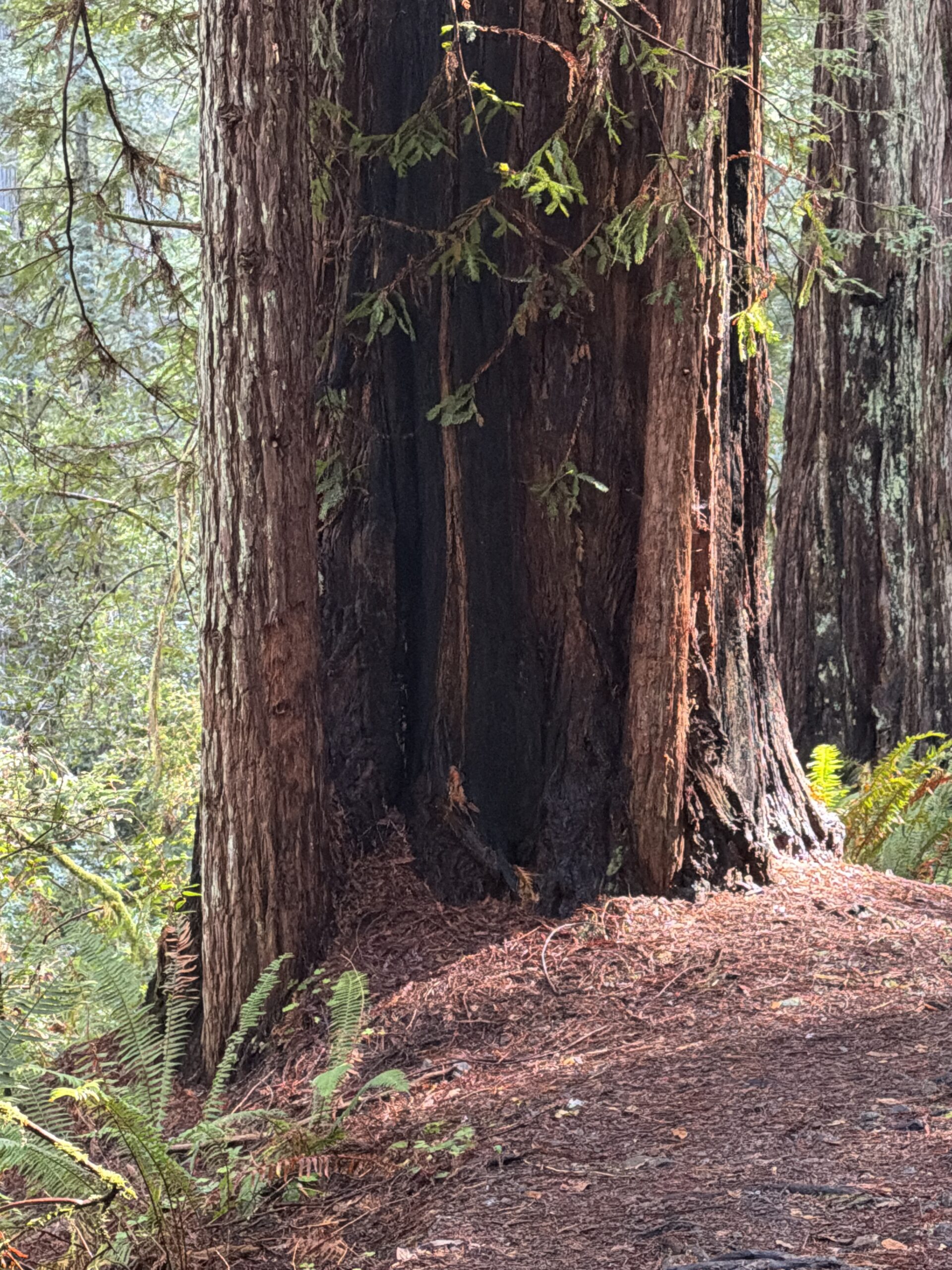
Most people don’t realize that redwoods grow in Oregon. They do — and some of the most beautiful old-growth groves anywhere sit just up the Chetco River from Brookings. An afternoon in there feels nothing like the rest of the coast. It feels ancient. And that’s exactly the point.
Where the Redwoods Begin
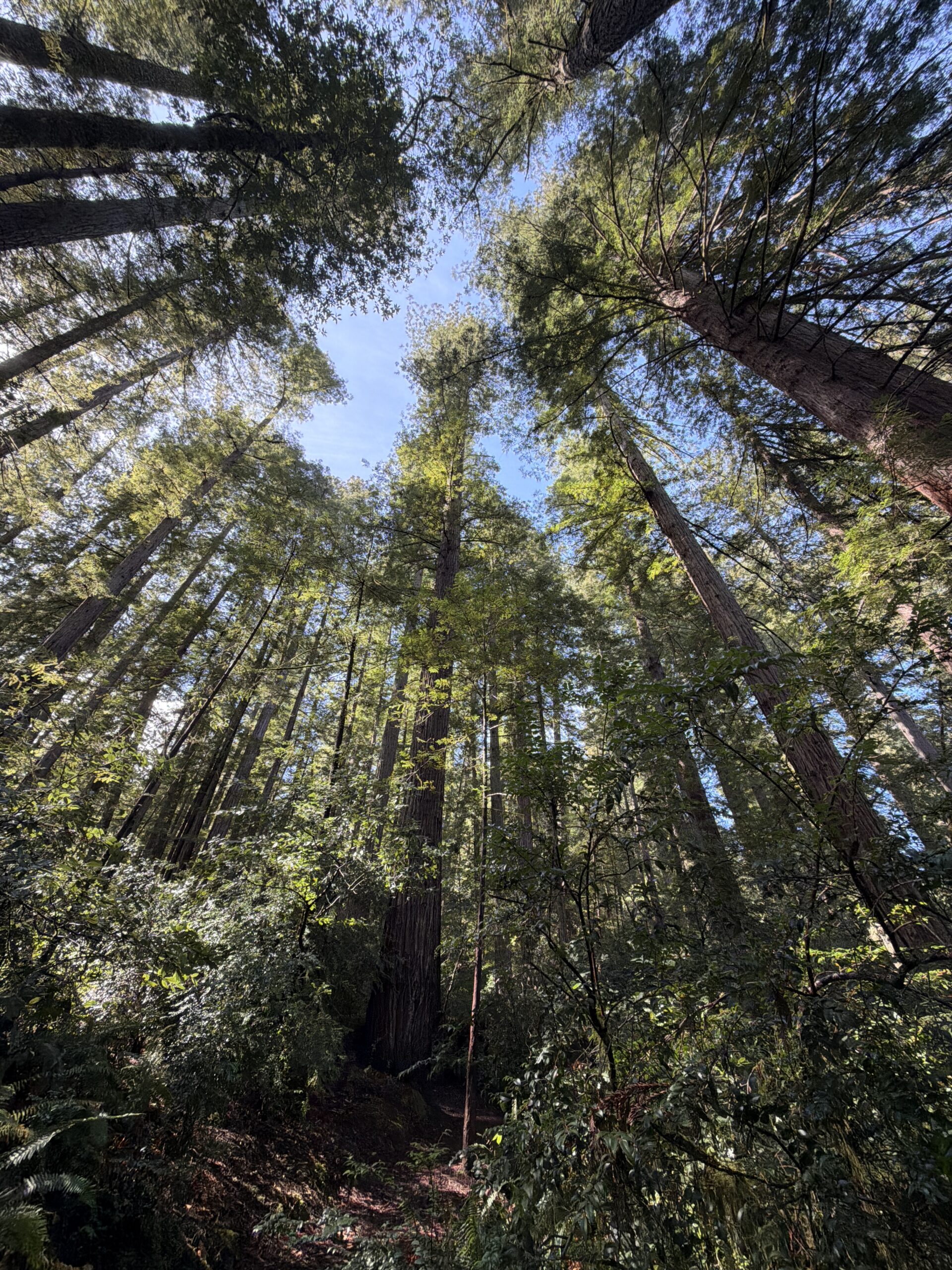
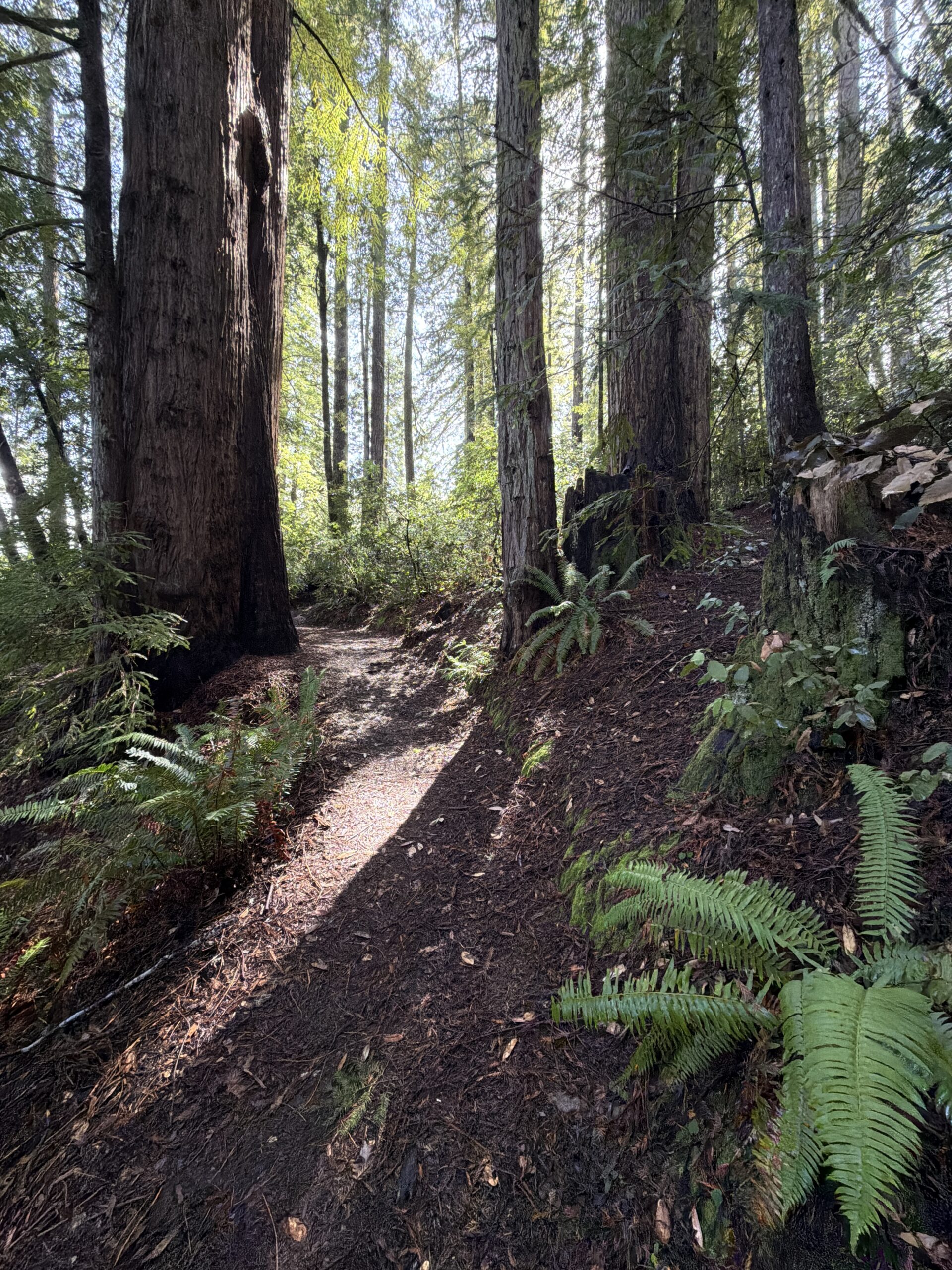
The redwood range technically ends in Northern California, but the Chetco River corridor carries those giant trees a little further north than most maps suggest. The grove outside Brookings is one of the northernmost redwood stands in existence — and because it sits in a river canyon sheltered from ocean winds, the trees here grow tall and straight and old. Getting there doesn’t take long. A short drive from town puts you in a completely different world. The temperature drops. The light changes. The sound of the highway disappears and is replaced by the river and wind high up in the canopy — so far above you that you have to stop and actually tilt your head back to find it.
Redwood forests have a particular quality that’s hard to put into words without sounding like you’re exaggerating. The scale is just wrong — in the best possible way. You’re used to trees being a certain size, and these trees break that reference entirely. The trunks are wider than some living rooms. The bark is thick and fibrous and warm to the touch in a way you don’t expect. The afternoon light filters down through the canopy in shafts, catching dust and pollen in the air, and everything at ground level is lit by what gets through — a soft diffused green that makes the whole forest feel like it’s glowing from the inside. It’s the kind of light that makes your phone camera useless and forces you to just stand there and look. The River Below, the Trees Above
The redwood groves along the Chetco are accessible via North Bank Chetco River Road, which follows the river east from town. The drive itself is worth the trip — the road winds along the river through increasingly dense forest, and by the time you reach the grove you’re already deep in the canyon. Bring water, wear layers, and plan for 1-2 hours if you want to actually settle in rather than just pass through. Dogs are welcome on the trail. The ground is soft and the river has spots shallow enough to wade in summer. It’s one of those places that works in almost any season — quiet and misty in winter, cool and green in summer, absolutely golden in fall when the light slants low through the trees.
Brookings By The Sea celebrates everything that makes this corner of Oregon special. Browse our coastal lifestyle apparel in the shop and wear your love for the coast wherever life takes you.
〰
Stay Connected
Follow the Coast
Join us on social media for coastal inspiration, new arrivals, and life on the Southern Oregon Coast.